There are quite a few eSIM providers in Israel, and sometimes there just isn’t enough time to start decoding who offers what. That’s because eSIM is no longer considered a “new thing” — it’s part of everyday life for many users in Israel. Even so, many people are still unsure which companies offer it, how they differ from one another, and what’s important to check before deciding who to activate the service with.
So before diving into comparisons, plans, and fine details, it’s important to understand one small but meaningful thing. Most companies present themselves almost the same way: “easy activation,” and similar promises. You’ll find that everywhere. But in practice, there are big differences. Some offer high speeds but less data, others are cheaper but have limited coverage, and some simply drive you crazy with a complicated activation process.

Anyone looking for a simple solution with no commitment can also opt for top up prepaid(Tokman) as a flexible alternative to eSIM.
Who Offers eSIM in Israel?
Almost all the major companies — along with a few smaller ones. The main differences lie in the level of support, network quality, and how smooth the activation process is.
Pelephone
Pelephone’s biggest advantage is strong coverage. For anyone traveling to more remote areas in Israel and looking for an eSIM, this is one of the companies that offers real peace of mind. The interface is relatively simple, although you may occasionally need to wait a bit for phone support.
HOT Mobile
Affordable and convenient, but quality can sometimes vary by location. For light users or anyone looking for something basic, it’s a reasonable choice. If you’re a parent who just wants “a bit of internet for a child and nothing more,” this can work very well.
Partner
One of the fastest and most stable networks in the country. It offers eSIM support for a wide range of devices, especially suitable for anyone looking for smooth browsing without unnecessary headaches.
Cellcom
Cellcom has stepped more strongly into the eSIM world in recent years. The experience can vary from user to user, but for those looking for a well-priced plan, it’s an option worth checking out.
Smaller companies in Israel don’t operate their own independent cellular infrastructure. Instead, they run on the networks of the major providers. This means the technical quality depends on the infrastructure of Partner, Pelephone, or Cellcom, but the overall experience is different: usually lower prices, simpler signup processes, and faster service — though with less advanced technical support and less stability during peak hours. They’re especially suitable for anyone looking for a low-cost solution, for children, a secondary device, or basic usage that doesn’t require top-tier speeds.
There are also international companies that provide eSIM services in Israel, such as Airalo, Holafly, and Nomad. They don’t operate their own local networks either, but instead rely on Israeli cellular infrastructure through local operators. For further reading, click here.
What characterizes eSIM companies in Israel?
- Coverage: All providers have good coverage in central areas, but performance in peripheral regions varies. Pelephone is strong almost everywhere, while others are more location-dependent.
- Shared infrastructure: Some companies use the infrastructure of major carriers, so their network quality is very similar. The real differences are price and customer service.
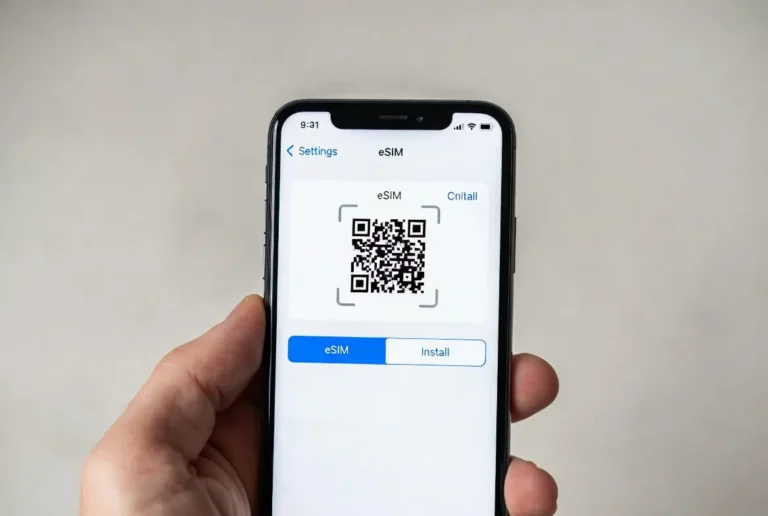
- Uniform activation process: Activation is almost identical across all providers: order, receive a QR code, scan it. There is very little technological difference between companies.
- Different transfer policies: Some companies allow easy transfer of an eSIM to another device, while others restrict it or charge a fee.
- Service differences: Large companies offer more professional service but are less accessible. Smaller companies tend to be more available, but with fewer solutions for complex issues.
- Target audiences: Each company targets a different audience—heavy users, basic usage, children, secondary devices, etc. That’s why there’s no single “best” provider, only the one that’s best suited to your specific use case.
eSIM companies in Israel offer a wide range of solutions, and the differences between them focus on coverage, stability, and speed—not on dramatic gaps. The right choice depends on your needs: location, device, and level of usage. On the other hand, if you want to buy an eSIM as quickly as possible and don’t have time to compare, it’s usually best to go with the cheapest eSIMs available.