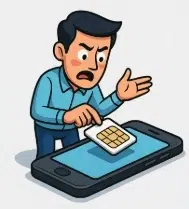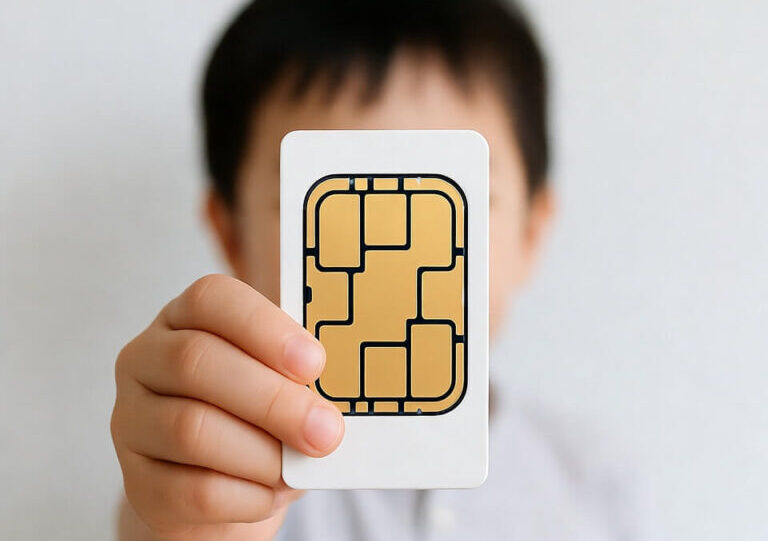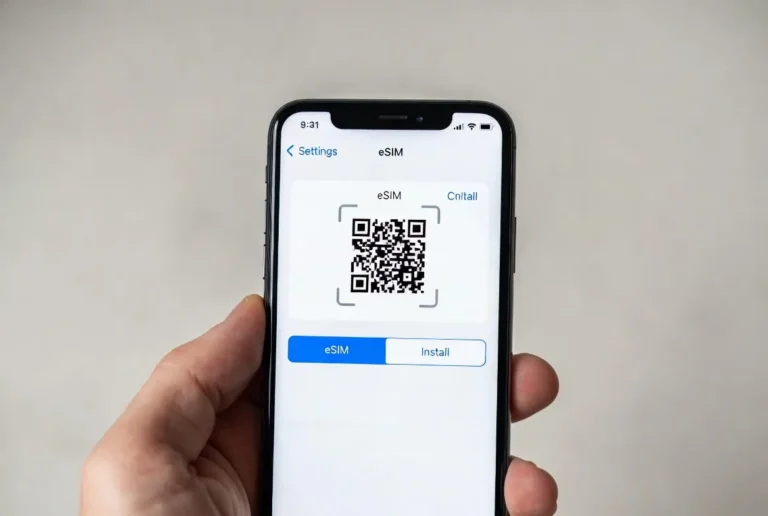
The mobile world has changed in almost every possible way over the past decade, but the SIM card has been with us for 30 years. In this article, we will explain what a SIM card is and how it works.

What is a SIM card
To understand how a SIM works, you first need to know what it is. A SIM card is a small chip found in almost every mobile phone since the 1990s. It is not just a card. It is your cellular identity. It contains unique data that allows your device to connect to the mobile network, receive a phone number, make calls, send messages, and access the internet.
Inside the SIM you will find:
- IMSI: This is a unique number linked to your cellular account (International Mobile Subscriber Identity). You can think of it as a “cellular ID card.” Every time your phone connects to a cell tower, the network checks this number to know who you are, which operator you belong to (for example Hot), and whether you are allowed to connect. And no, the IMSI is not your phone number.
- Encryption keys for securing communication: These are essentially “codes” that the SIM and the network use to ensure that the information exchanged between them remains private and cannot be intercepted. When you make a call, send a message, or browse the internet, these keys help encrypt the data. This means that even if someone tries to listen in using a third party device, they will not be able to understand anything.
- Additional basic information that tells the system the device belongs to you: In addition to the IMSI and encryption keys, the SIM contains some small data elements that help the network operate smoothly. For example, which operator you belong to, which frequencies and services your device should receive, and sometimes settings that allow the device to connect to networks abroad.
This is technical information, but it allows the phone to “talk” to the network without you needing to configure anything manually.
How does a SIM card actually work?
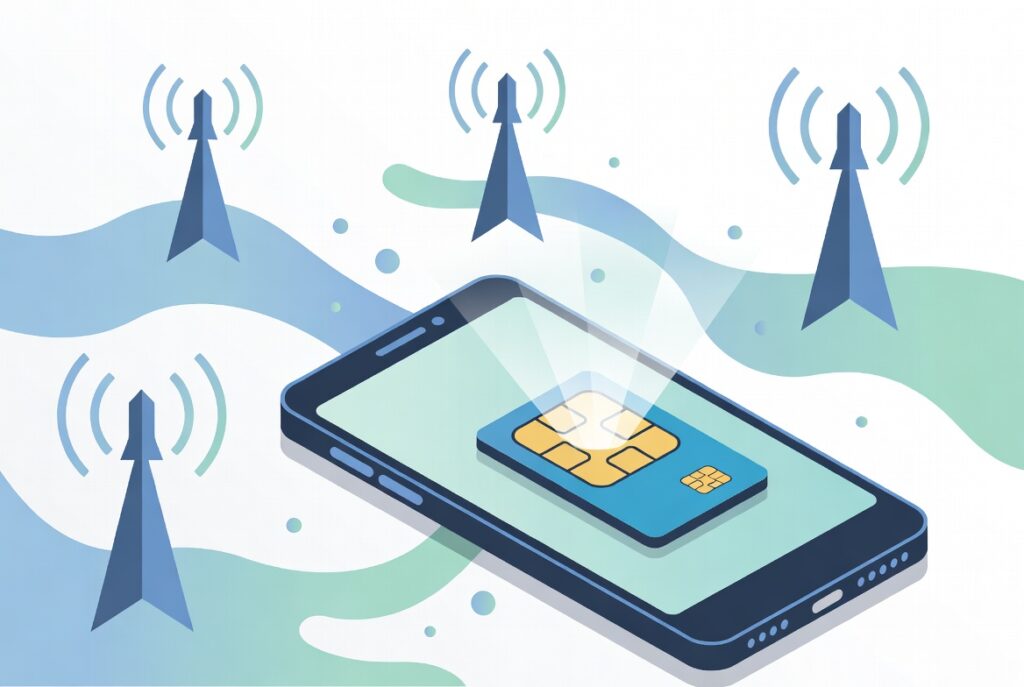
When you insert a SIM card into a phone, a short but quite smart process happens behind the scenes. You can think of the SIM as a smart ID card that starts a “conversation” between your phone and the mobile network (the outside world):
- The phone detects the SIM: As soon as the phone powers on, it checks whether a SIM card is inserted.
- The phone searches for a cell tower: Your phone starts looking for cellular towers belonging to the SIM’s operator, meaning the company that provides your service. Usually, the closest or strongest tower is selected and the device connects to it. Once this connection is stable, the process moves to the next step.
- The SIM identifies itself to the network, like passing through a secure entrance: Once the phone connects to a tower, the identification stage begins. The SIM sends the IMSI. However, it is not sent in plain form but in an encrypted way, so no one can discover the number or steal your identity.
- The network checks whether you are “on the authorized list”: After receiving the identification from the SIM, the network checks in its servers:
• Whether this card belongs to a real user
• Whether it is active
• Whether it has an active plan
• Which operator it belongs to
• In which areas it is allowed to connect
Only if everything is valid does the network grant the phone “access approval”. - The network returns a personal code to the phone: The network and the SIM perform an authentication process. This is similar to a one time password that the network generates and the SIM must prove it knows how to decrypt. This is what ensures a SIM cannot be forged or used fraudulently.
- Now the phone is “officially connected”: From the moment the network approves the SIM, your phone enters an active state:
• You can make and receive calls
• Send and receive SMS messages
• Browse the internet via 4G or 5G
• Use your operator’s services
Every time you perform an action, the SIM continues to authenticate in the background to make sure everything belongs to you and that no one is impersonating you. Encrypted communication: All information that passes between the phone and the cell tower is encrypted. The SIM takes part in this encryption process to prevent:
• Call interception
• Data theft
• Line spoofing

Ultimately, understanding how a SIM works means understanding the heart of mobile communication. This small card identifies you on the network, keeps your communication secure, and allows you to connect to the internet and make calls without needing to do anything special. But that’s not all. In fact, there are different types of SIM plans, and each one works a bit differently. Visit our main page to see what we recommend.